

When you first start running, chances are you start with a goal like 5K. As you get stronger and your ambitions grow, you’ll start running longer distances, perhaps even an hour or more. At that point, it’s not only important to drink enough, but the question also arises: what and when should you eat while running?
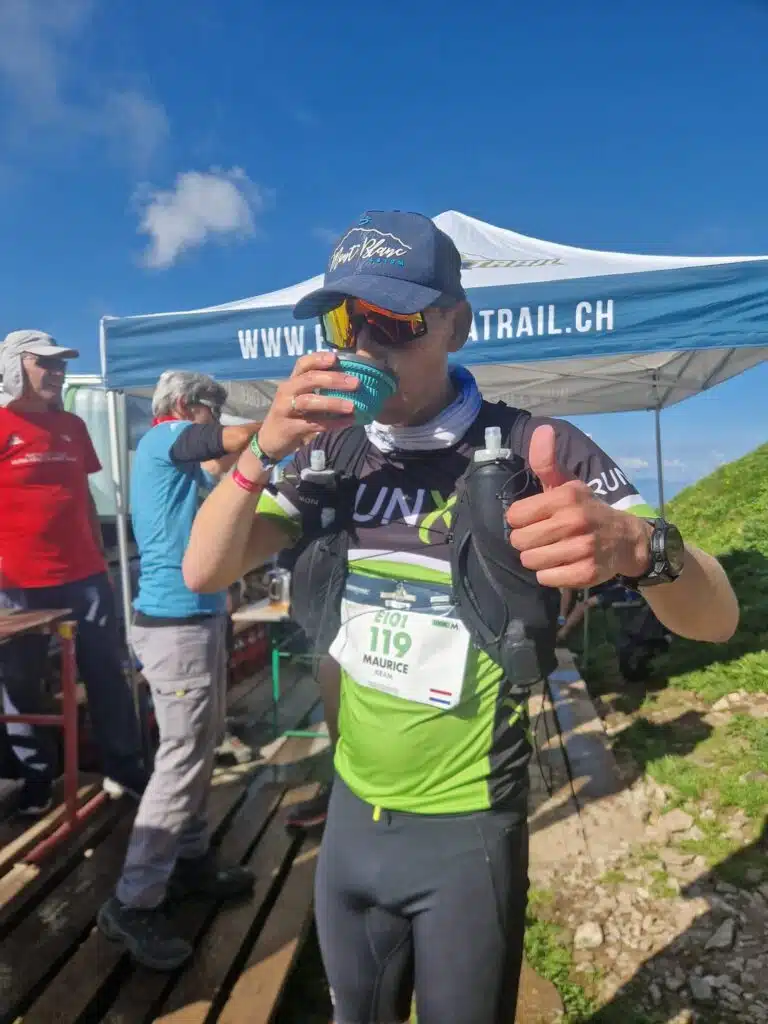
Many runners are aware of the importance of drinking enough, especially in warm weather. However, nutrition while running, such as the use of gels, often remains underexposed until one starts training for a marathon. In this article, I will give you practical advice on using gels while running, what the differences are, and which products are best suited to your running needs.
Carbohydrates and Electrolytes: The Basics
As a long distance runner, it is essential to understand the terms carbohydrates and electrolytes. Electrolytes are minerals that help the body absorb fluids better. This is especially important when you sweat, as you are losing not only fluids but also these minerals. By taking a sports drink with electrolytes, you ensure that your body stays hydrated and your performance is maintained.
Carbohydrates are the fuel for your muscles, but your supply is limited. Especially during long distances, such as marathons, it is crucial to replenish these stores to avoid the dreaded “man with the hammer”. A trained runner can consume about 90 grams of carbohydrates per hour without stomach problems. This is equivalent to 360 calories per hour, which gives you an idea of the amount of energy you need during a long effort.
The Importance of Drinking
Most trainers advise to always drink during long endurance runs, especially when it is hot. For efforts lasting longer than an hour, it is wise to take a water bottle with you or place it somewhere along the route, filled with a drink that contains electrolytes. A popular choice among top athletes is the Maurten drink mix, which contains both electrolytes and carbohydrates. The mix is available in two versions: the Drink Mix 160 and 320, where the numbers refer to the number of carbohydrates per 500 ml of water. By combining these, you can create an effective nutrition plan for your training or competition. The 160 mix contains 40 carbohydrates and the 320 mix contains 80 carbohydrates. The name of the mix refers to the number of calories. So realize that if you take two times half a liter of 320 mix, this is equal to 160 grams of carbohydrates!
Gels
Unlike drinking, using gels is a lot more complicated. Gels come in different varieties, based on fructose (fruit sugar) or maltodextrin (glucose). Both forms of sugar are quickly converted into energy by the body, but not every runner reacts the same to these substances. It is therefore important to test which variety works best for you, especially to prevent stomach complaints. You can also opt for gels with caffeine, which can give you a boost, especially in the last kilometers of a marathon.
My Preference and Recommendations
When should you use gels and which ones are best? As a marathon and ultra runner, I have developed my own preferences. I personally take a gel during endurance runs longer than 75 minutes and make sure to drink along the way. In training, I only use gels if the session lasts longer than 90 minutes or if I want to practice for a race. It is crucial to experiment with your nutrition plan during training so that your body gets used to the products you will use during races.
For most runners, the half marathon is the first distance where nutrition plays a role during the race. My advice is to take a Maurten drink or gel every 25 to 30 minutes. My own preference for gels goes to Torq and Maurten. Torq is less sweet and Maurten is neutral.
A detailed nutrition plan is essential for a marathon. I personally consume 6 to 7 gels during a marathon, which corresponds to the aid stations along the route. Most major marathons have Maurten gels available, which makes it easy to follow your nutrition plan. At RunX you can get all types and sizes of gels, take a look!
Ultramarathons: A Story of Their Own
If you go beyond the marathon distance, the nutrition plan becomes even more crucial and complex. I may write a follow-up on that someday, but until then, you can always reach out to me on Strava for advice.
Have fun walking, Maurice
Marathon & ultra runner, RunX athlete